

Every reserve study has a column that counts down. Five years, three, two, one, zero. In too many communities, the real conversation about a large project starts at zero. That’s a bit like cracking the textbook on the drive to the final exam.
When a $1 million roof or repiping project hits zero, the questions arrive all at once. Does all of it really need to be done? What exactly is the work? What will it actually cost? Do we have the money? Who do we even call? Every one of those is a fair question. The trouble is they show up together, right when the fewest choices remain.
The years before zero are worth something. Here’s how to spend them.
Start by looking under the hood
A reserve study is a financial roadmap. It is not an engineering report, and it is not a construction contract. Its numbers are good estimates for long range planning, and they should get sharper as a project gets closer.
As a building ages, more of what matters hides where nobody can see it. Underlayment beneath the tile. Supply lines inside the walls. Drain lines under the slab. That’s why the first step is a qualified look at the real condition: a roofing consultant, an engineer, a plumber with a camera.
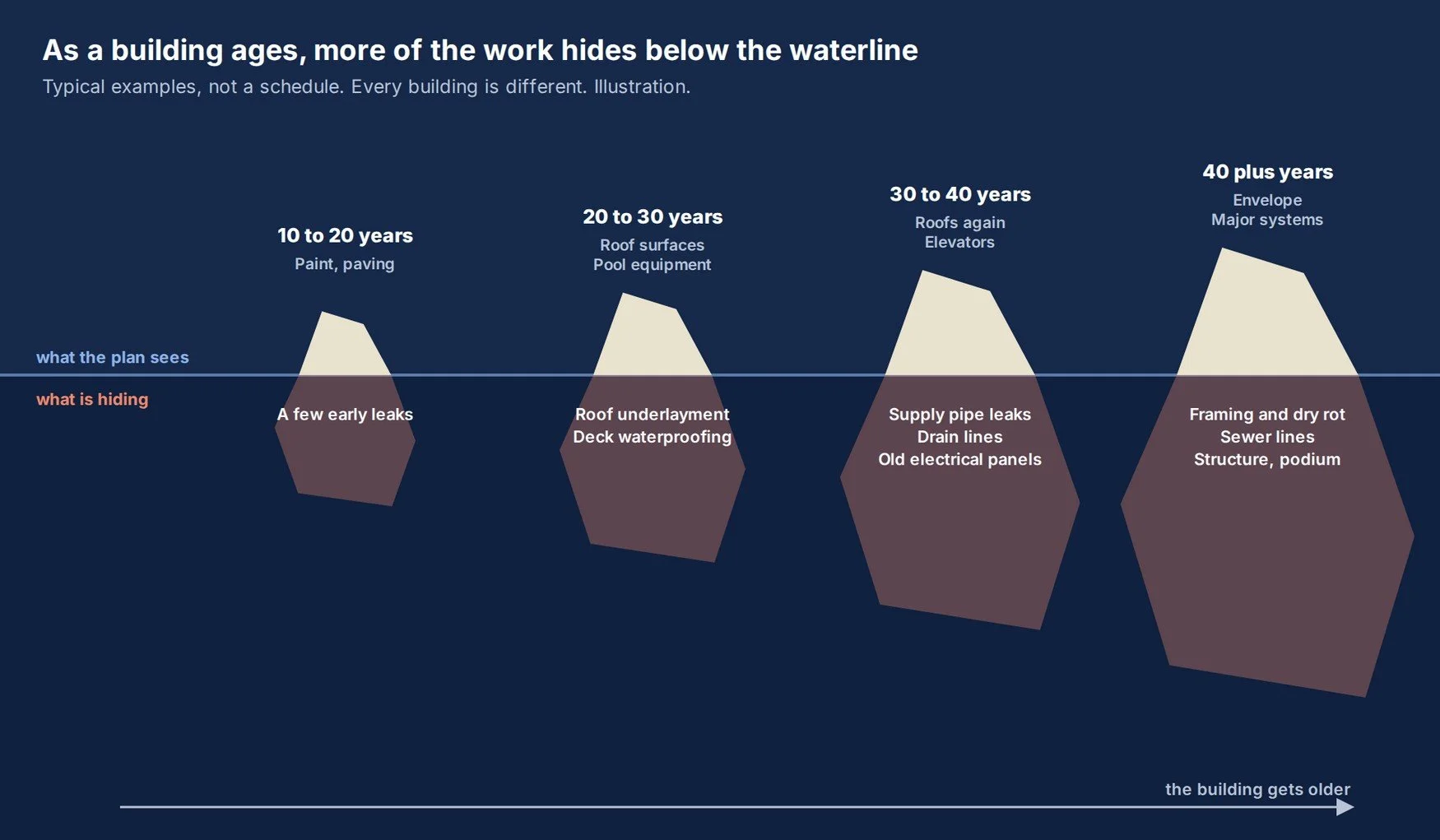
The answer can go either way. Sometimes the roof is in better shape than the study assumed, and a professionally designed repair buys several more years. Sometimes a moisture survey finds water where nobody expected it, and the project grows. Either way, you found out with time left to act. The savings don’t come from waiting longer. They come from knowing what the building actually needs.
Write down what you’re buying
Here’s something I learned in my contractor days. Hand three contractors a vague request and you’ll get three different projects back, priced three different ways. The low bid might skip the dry rot repair, the permits or half the flashing. The high bid might include all of it. Without a common scope, a board ends up comparing numbers instead of solutions.
A good scope of work spells out what gets done, with what materials, to what standard, and what happens when the crew opens a wall and finds a surprise. For complex work, that may mean real plans and specifications. It’s unglamorous paperwork. It’s also where a lot of money gets saved or lost.
With a clear scope in hand, a proper request for proposal puts every qualified contractor on the same page, literally. Now they’re pricing the same project. When the bids come back, look past the bottom line. What’s excluded? Are the allowances realistic? Is the schedule believable? Does one proposal quietly shift more risk onto the association? Lowest price and best value are not the same thing, and on a large project, an independent bid review by someone who has worn the contractor’s boots can pay for itself many times over.
Close the loop with your reserve plan
This is the step that gets skipped most. The consultant writes a report. The board reads it, or at least the first page. And the findings never make it back to the reserve study.
Send what you learn to your reserve preparer. A short note does the job: we had the roofs inspected, the scope is being written, we expect bids in March, and it looks like about $1.3 million. Those few sentences turn an old estimate into evidence. They let the plan show what the new number means for your funding, especially during your Peak Funding Pressure Years.
Bad news found three years early is a planning problem. Bad news found three months early is an emergency.
And if your association is underfunded? Start anyway. You don’t need a healthy reserve balance to get a condition assessment on your largest project, gather the reports you already have, or ask your preparer to model a few funding options. Some of these steps carry professional fees, but they’re small next to the project they protect. Real safety findings and required repair deadlines, of course, get handled on their own terms. A spreadsheet never decides whether work can safely wait.
Three things to do this month
Pick your three largest projects in the next five to ten years. For each one, ask when a qualified professional last looked at it and how old the cost estimate is. Then find the next unanswered question, whether that’s a condition assessment, a scope or a real bid, and decide who should answer it. Finally, send whatever you learn to your reserve preparer.
That’s the heart of Reserve Plan Resilience. A resilient plan can take a hit and still leave the board with choices. The board that starts early keeps those choices. The board that starts at zero gets whatever is left.
So as every large project approaches, ask one question: are we getting more prepared for it, or just closer to it?
Want to go deeper? Read our white paper, Reserve Plan Resilience, or talk with us about your next study.
Erik Sundquist, RS
Managing Partner, SMA Reserves
